


Tech Sense: April 2026

Open Source Hardware
Last month we talked about the Raspberry Pi. I realized we hadn’t talked about some of the other electronic devices used to build things for over a decade. This month, I will re-introduce some other devices useful for building electronic projects. The Raspberry Pi is open-source software, but the hardware is not open source. Today we will look at open-source hardware. In summary, open-source means that the intellectual property is free and available for others to use without the need to pay licensing fees.
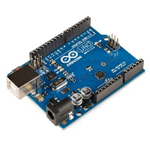
Arduino
Originally, the Arduino was a small series of controller devices developed to help new engineers learning to apply controllers to new projects. Arduino provided software development environment to program the devices, mostly using the C programming language. The boards could handle both digital and analog inputs and outputs. They also provided analog to digital conversion capabilities.
The Arduino development system connects the Arduino to a PC or other computer via a USB connection. The Arduino has a small program already built in that runs when connected. The development environment uses the program to upload and run new programs into Arduino. The code runs directly on the Arduino controller. Typically, there is no operating system (OS). It is possible to load a small Real-time OS into the device if needed for the project.
The Raspberry Pi Foundation has created a similar development environment for their Pico series of controllers. It too does not support Linux on the device.
There are now many different models of Arduino devices available. Newer models offer additional features, some including Wi-Fi and Bluetooth capabilities. Some of the newest Arduino’s are much more powerful than the traditional controllers. They can now accept an entire Linux OS and add Neural Processing Units (NPU) to assist with some AI support on the device.

Beaglebone
Texas Instruments created the Beaglebone for use by college projects. Like the Arduino, the Beaglebone pre-existed the Raspberry Pi but like the Arduino, the Beaglebone is open-source hardware. The last time I wrote about it, the Beagle Bone Black (BBB) with the most current model. The Beagle Bone has always run the Linux OS. The BBB includes 4 GB of flash memory, and 512 MB of SD-RAM with Debian Linux installed.
There are now a large number of new versions of Beagle computers. Pocket Beagles (models 1 & 2) are closer to the small size of a raspberry Pi Zero but with the same performance and configuration as the BBB. The model 2 also provides a LiPo battery charger. I imagine this is to allow the board to run during brief power losses.
Two new Beagles in the V-series, one Red (Fire) the other Blue (Ahead) both based on the open-source Risk-V processors. The Risk-V processors are also open source.
New AI editions, the BeagleBone AI-64 and the BeagleBoneY. These include specialized processing features like specialized matrix multiplier processors, digital signal processors, vision-processing accelerators, and image signal processors. Sounds like this might be good for a robotics project.
The Beagles all support standard plug-in add-ons called “Capes”. Raspberry Pi’s call their add-ons “Hats” or “Bonnets” for Pi Zero add-ons.
In general, the BeagleBone line of computers better fits embedded and industrial applications.

ESP32
The ESP32 evolved from a series of very small boards designed to ease the task of adding wireless communications, Wi-Fi and Bluetooth, for electronic devices. First came the ESP-01. American “Makers” found the chip an affordable means to add Wi-Fi to their and adopted it. Following the ESP-01, the ESP8266 added a microcontroller and the ESP8265 internal memory. This created small devices that were programmable and if the task was small enough, the programs could be contained in the single device. Expressif Systems created the ESP8266 and leading the ESP32. The ESP32 is now available in a large number of variants and made by a very large number of vendors with many, many options. Vendors include Expressif, Sparkfun, Adafruit, and Arduino.
Wrap Up
The Arduino came well before the Raspberry Pi and until recently didn’t have the ability to support a full OS. The Raspberry Pi Pico is a substitute for the early generations of Arduinos and in many ways, I think of it as better solution. It is certainly less expensive at today’s prices.
The Beaglebone also preceded the Raspberry Pi. I feel the Pi is a better computer for learning to compute. I can also do the kinds of things that I did at home, on a computer in the 80’s. Yes, I had a Timex Sinclair, a Commodore Vic-20, and a Commodore-64. I believe my Raspberry Pi’s can out-perform all of these, and even beats my Apple 2e, my father’s TRS-80, and my first two generations of PC clones.
I have Arduino computers, and a Beaglebone Black. I bought these for some IoT projects. I have an IoT project that I am planning for one of my Pi Pico’s. I have more than a dozen Raspberry Pi’s and I am using them almost all of the time, primarily for experimenting, testing and monitoring other systems and running cameras. Each one of these devices has purpose for me and they are fun to play with and learn.
There are a lot of other open-source hardware device out there. Most are very affordable and all are a chance to learn and have fun. If you enjoy learning about technology, I encourage you to buy one or two of these, the Raspberry Pi is a good starter and get involved.
See you next month.


The small fitness watch on my dresser has survived longer than several more complicated gadgets simply because it asks very little from me. I charge it, glance at a few numbers, and move on, which has made simplicity feel like a feature rather than a limitation. For a broader ownership picture, I look via https://fitnus.pissedconsumer.com/review.html where people describe setup, syncing, display readability, charging, comfort, and whether they kept wearing the device after the first few weeks. Technical specifications matter, but I notice friction much faster. If a device needs constant attention, I eventually stop reaching for it. The products that last in my routine are usually the ones that become almost invisible. That is the kind of experience I want a…